What is a German Bro(e)tchen?
A traditional bread roll that comes with many names and variations across the country
Rituals Worth Preserving
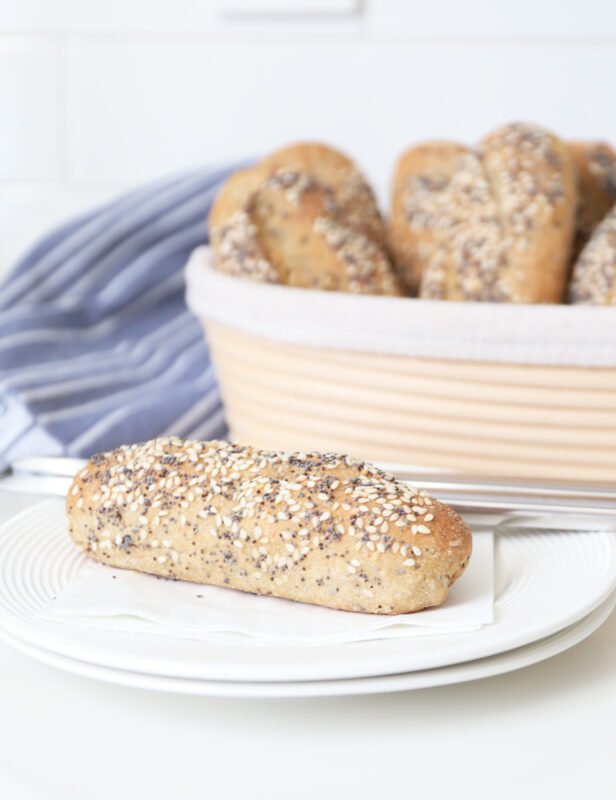
Saturday morning. Riding the bicycle across the small village to the old bakery. Picking the classic white ones with the cloudy crumb for her spouse, while Tanja reaching to the darker, seeded ‘Wecken’ for herself.
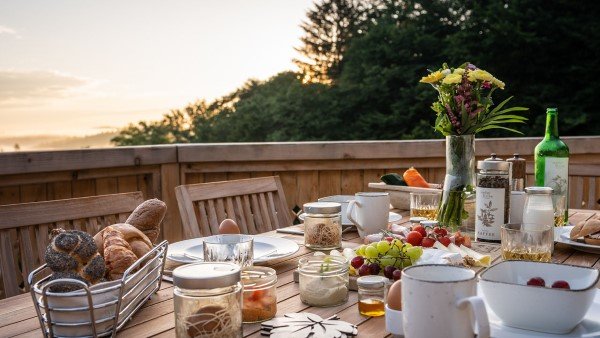
Meanwhile, her Austrian husband setting the breakfast table on the sunny patio. A bread basket waiting to be filled. A soft-boiled egg. No rush. This is what German Brotchen actually means.
| What is a Brötchen?
A Brötchen (or Broetchen, Brotchen) is a small German bread roll (ca. 50-80 g), typically eaten fresh on the day it is baked. Crispy on the outside, soft inside, and made with a short list of ingredients – flour, water, yeast, salt, and the same care as their big brother. By law the fat and sugar content must be <10% of the flour weight.
Unlike sliced bread, Brötchen are bought or baked in the morning and eaten the same day. They are to the German weekend what a croissant is to a French café – not just food, but a ritual.
| A Bread Culture Of Its Own
Often reserved for the weekend – a bread basket full of brotchen, soft pretzels (Brezeln), einback and croissants. It’s the time when the table gets nicely set with everything your heart wishes for. Enjoying the time off and gathering with laughs and stories from the week.
That does not mean during the week the bread rolls are out of sight. The opposite is true. A lunch sandwich can be equally made with a bread roll or two slices of bread. And it is also the perfect pairing for the heated Wiener wurstchen or the traditional currywurst, holding a breaded schnitzel or a bratwurst. This more rustic style is a beloved morning break and lunch go-to with construction and white collar workers alike.
| the regional names of brötchen
In high German ‘Brötchen’ is the standard term for all types of bread rolls and understood across the country. But in some regions the people will probably smile at you and ask where you are from. Because Germans have so many different names for regional bread rolls, don’t be offended. They call it ‘Semmel’ in the southern part or ‘Wecken, Weckle’ in the Southwest.
There are hundreds of variations of brotchen you can find allover Germany. For instance, the classic plain white bread roll with a thin crispy golden crust. It comes in different shapes and has many names:
- Rundstück – Hamburg and northern Germany
- Schrippe – Berlin and northern/eastern Germany
- Kipf – northern Bavaria or upper Franconia
- Spitzwecken / Weck(le) – Baden-Wuerttemberg
- Semmel / Kaisersemmel – Bavaria and Austria
- Wasserweck / Weggli – border region to Switzerland
This is just a tiny excerpt of what you can expect visiting a German bakery on the lookout for a white bread roll. All non white bread rolls are often named after the flour used, the seeds added or after historical and regional names.
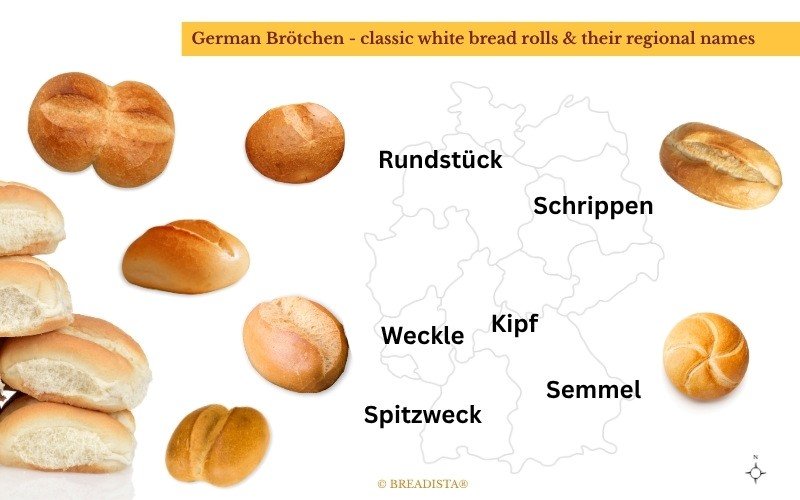
How are white German Brötchen called? – Map of Germany
| Why you can’t find them here
Many German speaking expats in the US are on the hunt for not just a good loaf of bread, but also for the typical brotchen for breakfast. It’s something special. It says weekend and relaxation.
Some grocery stores and big chains try to sell things they call ‘Semmel’. That unfortunately, falls flat and fails dramatically. The ingredients, massproduction and a rushed process do not work in favor for authentic results or taste. Many tried – almost all failed.
When you’re lucky enough having a great German bakery in your area – run! They sell out pretty quick. We know of some and they do not have only happy Germans as their repeating customers. Americans falling for authentic high quality products too.
Keeping a tradition alive and honoring the craftsmanship is a calling and a true piece of art. 💛
| Making German Brötchen At Home
Ok. Not everyone is a master baker or even wants to call themself ‘advanced’ when it comes to baking. Making artisan bread seems for many like a hurdle that is hard to take, unachievable.
What when I say – it’s simple. It takes you 10-15 min hands-on time, no kneading, not even machines, and in the end you look like a pro. Yeap – it’s true. Promised.
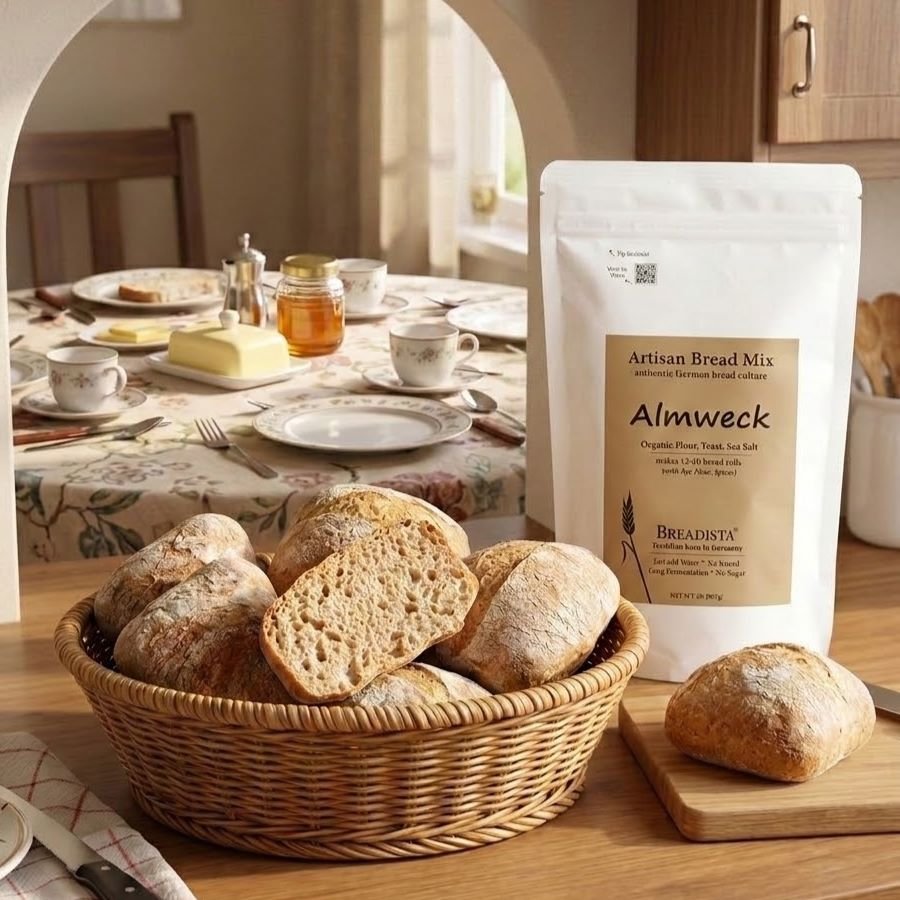
Start with the super easy to make hearty Almweck with rye flour. Put the dough for a overnight rest in the fridge, quickly shape and bake them in the morning. You won’t ride a bicycle to a German bakery – but your kitchen will come close to turn into one.
– Your German bread nerd, Tanja
About the Author
Tanja is the founder of BREADISTA, a Los Angeles-based artisan bread brand rooted in German baking tradition. She grew up in Germany, moved to LA, and couldn’t find the bread she was raised on – so she started making it. BREADISTA bread mixes contain three ingredients with organic flour as the base. That’s intentional.
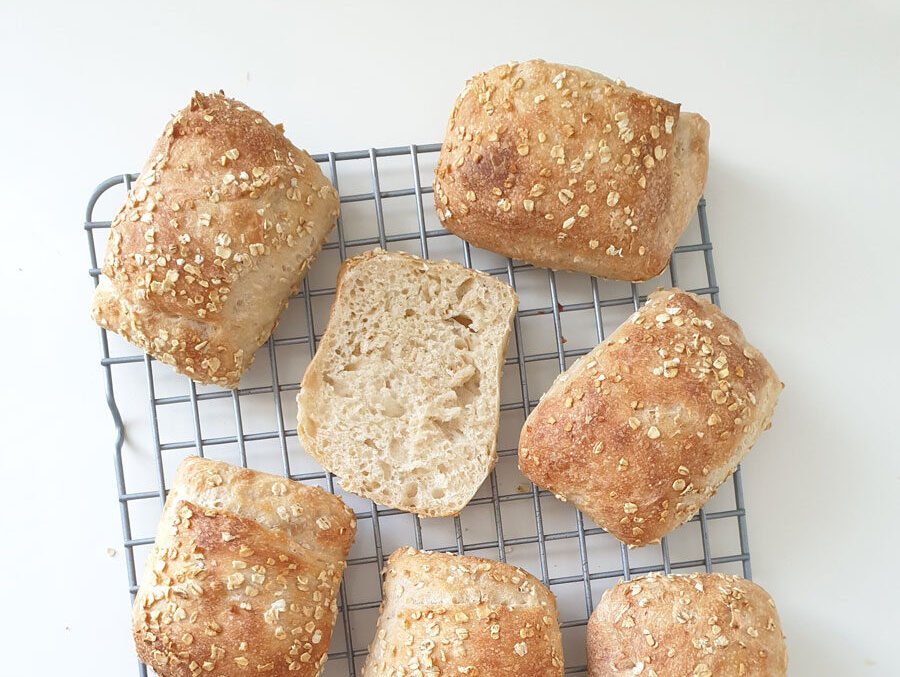
More the white German brotchen fan? Check out our Oaty’s recipe idea.
Read further about ‘Enriched Flour’ in this blog post.