
Dried Sourdough in Bread Mixes: Why We Don’t Use It
About dried vs. fresh sourdough starter and the “sourdough” loaves sitting on your grocery shelves
dried starter and a fresh, actively fermenting starter are not interchangeable
| ‘Sourdough’ – a word that gets misused
A lot of bread mixes marketed as “sourdough” work the same way: a spoonful of dried sourdough starter, milled into powder, mixed directly into the dry ingredients. It reads like a shortcut to the real thing – the tang, the chew, the reputation sourdough has for being gentler on digestion. But dried starter and a fresh, actively fermenting starter are not interchangeable, and professional bakers have known this for a long time.
This isn’t a case against the ingredient itself. It’s a case about what happens to it when it’s used the way most bread mixes use it – straight from the packet, with none of the steps that would actually wake it up.
| What Dried Sourdough Starter Actually Is
Dried sourdough starter is a real, dehydrated culture of wild yeast and lactic acid bacteria – the same microbial community found in any fresh starter, just put to sleep for storage. Properly dried and stored, it can stay viable for years.
The catch is what “viable” means in practice: baking educators who work with dried starter are consistent on the timeline, typically outlining a five-to-seven-day feeding schedule to bring it back to full leavening strength – gradual rehydration, then daily feeds of flour and water, until it’s reliably doubling again. That’s not a hedge or an oversell. It’s what the biology requires: dormant cells need time and nutrients to become active fermenters again.
A dried starter isn’t one ingredient working alone – it’s a small team. Wild yeast is what makes the dough rise. A separate group, lactic acid bacteria, is what gives sourdough its tang and most of its depth of flavor. Drying doesn’t kill either one; it just pauses them, the way cold storage pauses a lot of living things. Rehydrated slowly, both wake back up and get to work together. Skip that step, and they’re still technically present in the mix – just not doing anything yet.
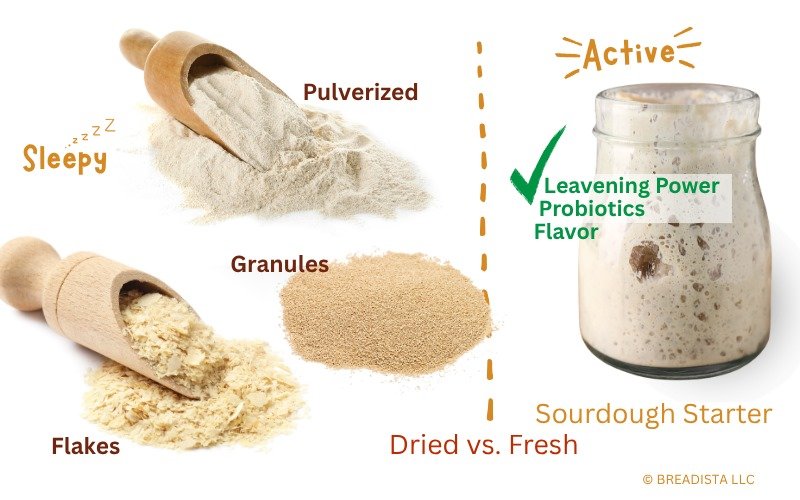
Different types of dried vs. fresh sourdough starter – BREADISTA
| The Gap Between “Contains Sourdough” and “Fermented Like Sourdough”
Here’s where most sourdough bread mixes quietly skip a step. Dried starter that goes straight into a dry mix – no rehydration, no feeding window – hasn’t gone through the process that makes it capable of leavening dough. Home baking guides are direct about this: starter that hasn’t been reactivated is fine to fold into something like pancakes or waffles for a flavor note, but it isn’t described as reliable for actually raising bread. That’s a meaningful distinction dressed up as a minor technicality.
It also explains a practice some bakers assume is a profit tactic: dried starter is commonly sold as its own product, separate from a bread mix, with its own multi-day reactivation guide attached. That’s not upselling. It’s the only way to get a real, active starter out of a dried one.
| Why Dried vs. Fresh Starter Matters More in a 2–3 Hour Bake
The gap matters most when the mix promises sourdough character on a short timeline. Real sourdough’s signature qualities – the acidity, the complex aroma, the structural change in the dough, and the partial breakdown of gluten that traditionally makes long-fermented bread easier to digest – are the product of sustained fermentation, typically 12 to 24 hours. Dried starter mixed straight into a dough that will proof for two or three hours simply hasn’t been given the conditions, or the time, to do that work. What it can realistically contribute in that window is a background tang or aroma note. What it can’t contribute is the fermentation-driven benefit people actually associate with the word sourdough.
| What that means for packaged bread
It’s worth asking the same question about the “sourdough” loaves sitting on grocery shelves, not just mixes. Commercial dried starter cultures exist specifically because they’re cheaper to store, ship, and dose consistently on an industrial line than a live, fed starter that needs daily attention. It’s reasonable to assume a fair amount of shelf sourdough bread is built the same way – a dried culture added for flavor, not a true multi-hour ferment.
Nobody can say that with certainty for every product on a shelf, since recipes aren’t public. But it does raise a fair question: if a loaf were made with a genuinely fresh, active starter and a real long ferment, that’s a selling point worth printing. “Sourdough” alone on a label doesn’t say which one a shopper is getting.
And, if a label says ‘cultured’ or ‘fermented’ wheat flour instead, that’s a different thing entirely — here’s how it’s not the same as sourdough.
| What Pro Bakers Actually Say
Dried vs. fresh sourdough starter – among German and Swiss trained bakers, the preference for a fresh, actively fed starter over a dried one added directly is close to universal. Not out of purism, but because a live starter simply performs better: stronger leavening power, more complex and rounded flavor, and more versatility across different doughs. A dried starter used without reactivation can add a note of flavor at best. It doesn’t deliver the fuller picture people expect when they see “sourdough” on a label. It’s a fair critique, and one Breadista largely shares.
| Why Breadista Doesn’t Add Dried Sourdough To Its Mixes
Rather than powder something in to imply sourdough character a short bake can’t actually deliver, Breadista mixes are built deliberately low in commercial yeast – which leaves room for a home baker who wants real sourdough depth to add their own fresh, active starter alongside the mix.
That’s the idea behind Frieda: a mix with enough headroom that a fresh starter can actually do its job, instead of competing with a full dose of commercial yeast.
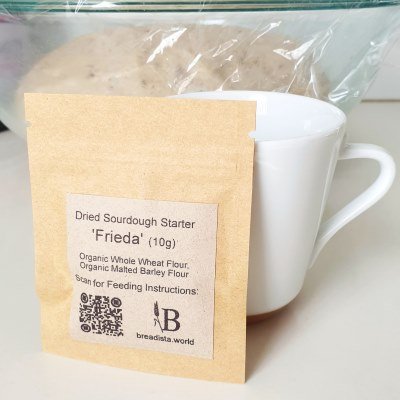
This kind of hybrid approach – a reliable base mix plus a baker’s own starter – isn’t a new idea. It’s a long-standing baking tradition, not a workaround. More on combining the two is in the Hybrid Loaf article.
Quick answers to your questions
No. Dried starter is real starter in a dormant state. It needs roughly five to seven days of feeding to become an active leavening agent again – used straight from the packet, it behaves mainly as a flavor ingredient, not a fermentation one.
Yes. Breadista mixes are formulated with less commercial yeast than most, which leaves room for a fresh, active starter to contribute its own leavening and flavor alongside the mix.
It can add a mild tang or aroma note. In a short bake, it isn’t doing the fermentation work – the acid development, dough conditioning, or digestibility benefit – that people associate with sourdough bread.
