New Year’s bread tradition in Germany
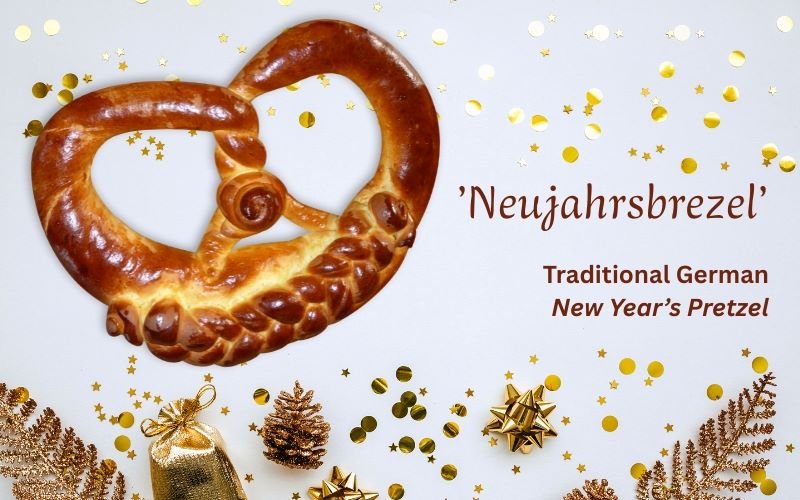
In Germany, New Year’s Day is not only about fireworks, resolutions, and fresh calendars. It is also about bread. One very special bread: the Neujahrsbrezel, literally translated as New Year’s Pretzel. Soft, slightly sweet and golden, this traditional bake is deeply rooted in Southern German culture and carries far more meaning than its simple appearance suggests. – For many families, New Year’s Day would feel incomplete without it.
What Is a Neujahrsbrezel?
The Neujahrsbrezel is a large, soft yeast pretzel, enriched with milk, butter, and sometimes eggs. Unlike the well-known dark, lye-dipped classic pretzel, this one is not savory and not crunchy. Instead, it is fluffy, tender, and mildly sweet – closer to a brioche-style dough than to the typical German pretzel.
Traditionally, it is shaped into a pretzel with thick arms and a plump belly, baked until lightly golden, and sometimes finished with pearl sugar on top. Some versions are plain, others contain raisins, and many are enjoyed sliced and generously buttered.
What makes it truly special is when and why it is baked.
A Bread of Good Fortune and Blessing
The roots of the Neujahrsbrezel go back several centuries. In German-speaking regions, bread has always symbolized life, nourishment, and protection. Baking special breads for holidays was a way to mark time, honor seasons, and invite good fortune into the home.
The Neujahrsbrezel was traditionally gifted on New Year’s Day – often by godparents to their godchildren, by employers to workers, or between neighbors and family members. Giving a Neujahrsbrezel meant wishing:
- Good luck
- Health
- Abundance
- A “round” and complete year ahead
The pretzel shape itself carries symbolism. Its interwoven form is often associated with unity, continuity, and eternity. In a New Year context, it represents the cycle of time and the hope that the coming year will be whole and harmonious.
In some areas, children would proudly carry home their Neujahrsbrezel, sometimes nearly as big as they were, carefully wrapped and treasured like a prize.
Typical Regions Where Neujahrsbrezel Is Celebrated
The Neujahrsbrezel is most strongly associated with Southern Germany, especially:
- Swabia (Schwaben; Wuerttemberg)
- Baden
- Parts of Bavaria
- Rhineland Palatinate (Pfalz)
- The Neighboring Alsace (France), with close cultural ties
Each region has its own nuances, but the core idea remains the same: a soft New Year’s bread, shared with meaning.
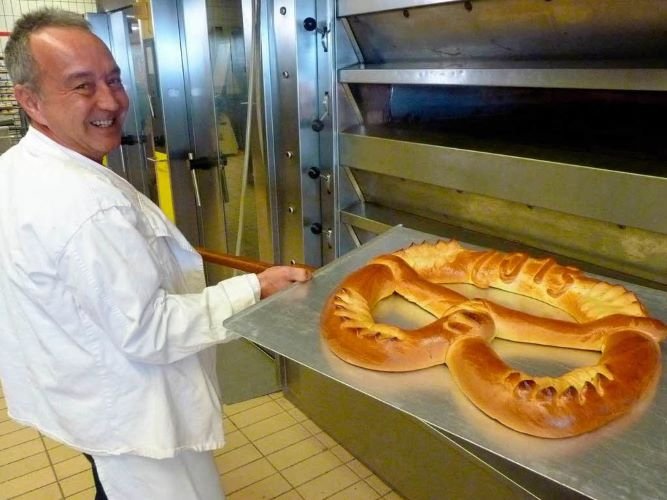
Even today, if you walk into bakeries in these regions, you will find Neujahrsbrezeln displayed proudly one to two weeks before and after New Year’s Eve and New Year’s Day. Sizes vary from small, hand-size pretzels to impressively large ones meant for sharing at the family table.
Regional Differences Across Southern Germany
While the name Neujahrsbrezel is widely used, the dough, sweetness, and shape can differ noticeably from region to region.
Swabia (Schwaben)
In Swabia, the Neujahrsbrezel is often:
- Less sweet
- Very soft and airy
- Sometimes completely plain, without sugar topping
It is commonly sliced and eaten with butter, honey, or jam – and occasionally even paired with savory spreads, showing how mild and versatile the dough is.
Bavaria
In parts of Bavaria, versions can be:
- Slightly richer
- More brioche-like
- Sometimes braided or decorated more elaborately
Sugar toppings are more common here, and raisins may appear more frequently.
Baden – A Special Case
In Baden, the region where BREADISTA’s founder Tanja is from, the New Year’s tradition goes one step further. Alongside the classic Neujahrsbrezel, you will also find something called Neujahrswecken – translated as New Year’s Rolls.
Neujahrswecken – The Lesser-Known New Year’s Pretzel Sibling
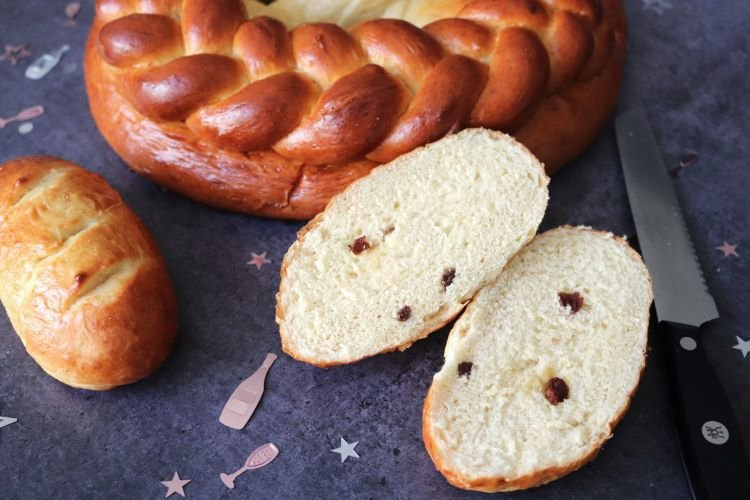
Neujahrswecken are made from the same soft, enriched dough as the Neujahrsbrezel, but instead of being shaped into a pretzel, the dough is formed into oval rolls.
They share all the beloved characteristics:
- Soft
- Fluffy
- Mildly sweet
- Perfect for butter
Some versions are plain and others include raisins, making them especially popular with children. In many Baden households, both shapes appear on the table – pretzels for sharing, rolls for individual enjoyment.
For locals, Neujahrswecken are just as emotionally charged as the pretzels. They are a taste of childhood, bakery visits with parents or grandparents, and the quiet magic of New Year’s morning.
More Than a Bakery Item
What makes the Neujahrsbrezel special is not only its taste, but its timing.
New Year’s Day in Germany is traditionally calm. Shops are closed, streets are quiet, and families slow down after the festivities of the night before. Sitting at the table with fresh bread, butter, maybe some jam, and a hot drink is part of easing into the year.
The Neujahrsbrezel belongs to that moment.
It is not rushed food. It’s shared, torn, sliced, talked over. It invites reflection, gratitude, and connection.
Why Traditions Like This Still Matter
In a modern world where seasons blur and food is always available, traditions like the Neujahrsbrezel remind us that some things are worth waiting for.
They connect us to:
- Regional identity
- Family memories
- Craftsmanship
- The rhythm of the year
At BREADISTA, this philosophy is deeply familiar. German bread culture has always been about more than ingredients – it is about meaning, memory, and care. The Neujahrsbrezel is a perfect example of how a simple dough can carry generations of stories.
A New Year, Softly Started
Whether shaped as a pretzel or as a humble roll, whether topped with sugar or enjoyed plain with butter, the Neujahrsbrezel stands for a gentle wish:
May the year ahead be nourishing.
May it be shared.
May it be full.
And perhaps that is exactly how a New Year should begin – soft, warm, and broken together at the table.
How to make a typical German Neujahrsbrezel
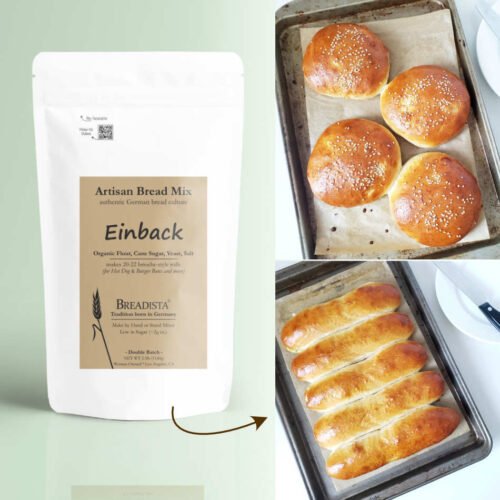
The easiest way to make this soft typical New Year’s tradition is with BREADISTA’s bread mix ‘Einback‘. You need only half a bag for one very big Neujahrsbrezel. There are no limits on how you ‘design’ a classic New Year’s Pretzel. Whether you add a double/triple twist to the arms or a little braided ‘Hefezopf’ on the belly. (Tip: use 180/200g raw dough for that, brush with water before laying it on top.)
The instructions for the dough are the same as for the ‘German Hefezopf‘, just shaped differently. – This version is Tanja’s way to make it, with eggs and only a slight touch of sweetness (omit the sugar from the Hefezopf recipe). Try the Neujahrsbrezel with cheese and thin sliced salami – delicious!