
Sourdough – Faux, Fake, Real
Sourdough sounds simple. Flour, water, salt, time. But stand in front of two loaves that both say “sourdough” on the bag, and the label starts doing a lot of quiet work.
Here’s the part that surprises most people: in the US, “sourdough” isn’t a legally defined word. Nobody has to prove a loaf was made with a living culture before printing it on the front. That doesn’t mean every sourdough label is a trick. It means the label alone can’t settle it, and this isn’t about handing out a verdict. It’s about getting as close to certain as the ingredient list allows.
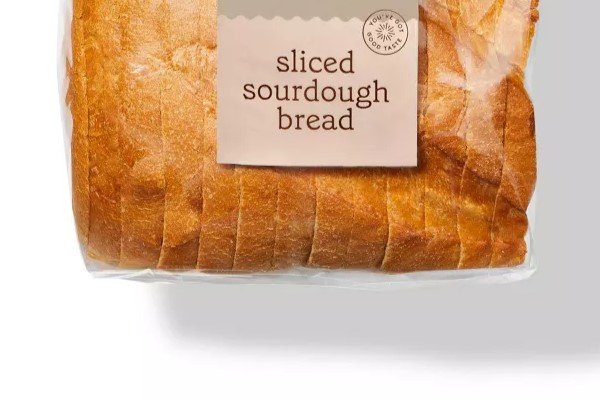
The one test that actually works: check for added acid
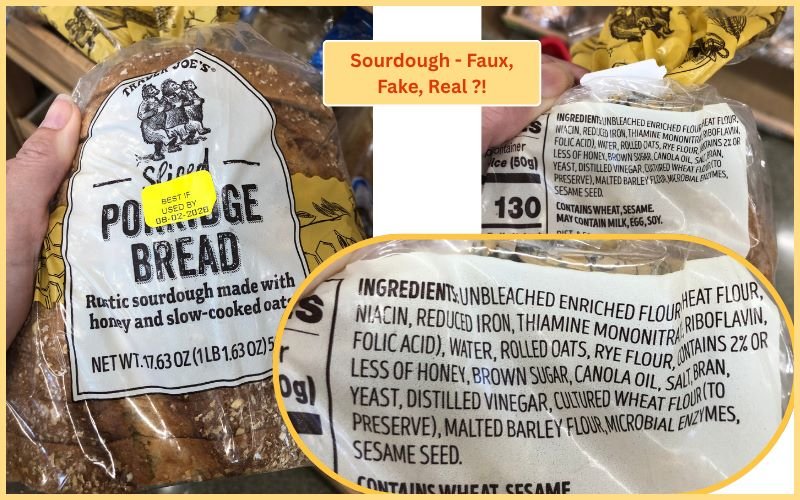
Pull two “sourdough” loaves from a grocery shelf and read past the flour. Neither ingredient list has to say “sourdough culture” or “starter” anywhere. What they do have, sometimes, is vinegar, acetic acid, lactic acid, or citric acid, sitting where the tang is supposed to come from. Some of these acids do double duty – flavor & taste plus preservative.
Real sourdough gets its sour-ish flavor from fermentation, a slow process a living culture does on its own. Added acid (the more the clearer) is a shortcut to the same taste and smell, without the process behind it. – But, and there often comes the confusion, sourdough bread does not need to smell or taste sour-ish at all. Depending on the starter used, how it is fed, how much is added and how long is the bulk fermentation when making the loaf – that all defines the sourness in the end.
Sourdough on the front. No sourdough culture in the ingredients. Sour flavor mostly or only from added acids. That combination is the strongest warning sign a label can give you.
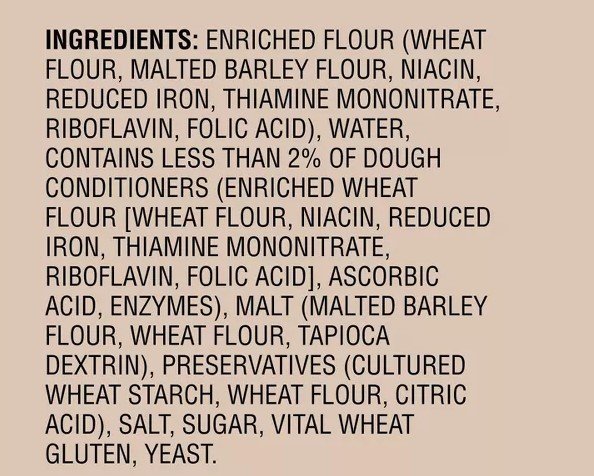
Exp 1: Ingredient list of a store-bought ‘Sourdough Bread’ – most likely fake/not real – you would have to ask
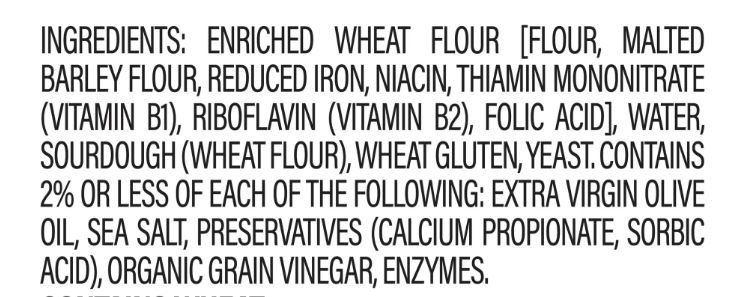
Exp 2: Ingredient list of a store-bought ‘Sourdough Bread’ – seems like a classic hybrid loaf, no bigger acid warning signs
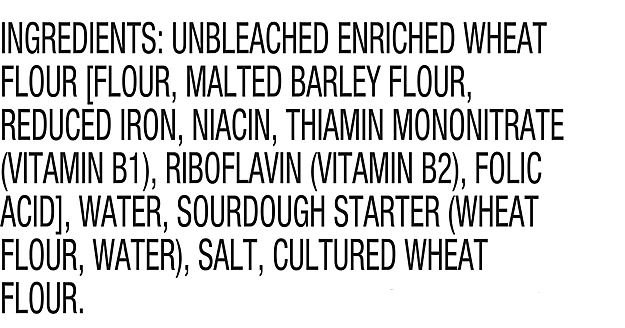
Exp 3: Ingredient list of a store-bought ‘Sourdough Bread’ – culture named, no added acids, strongest label signal there is
Why “no starter listed” doesn’t prove anything
Here’s where it gets less tidy. A sourdough starter, at its simplest, is just flour and water. Legally, a bread maker can list those two ingredients without ever writing the word “starter” or “culture.” So a real sourdough loaf can pass through your hands without a single word confirming it. When a real starter is named, it usually reads like “sourdough starter (wheat).” That’s a good sign, but leaving it out tells you nothing either way.
Which means the label game isn’t confirmation, it’s elimination. You’re not looking for proof it’s real. You’re ruling out the signs that it’s not. If the added acids aren’t there, that’s one hurdle cleared. It’s not a finish line.
Does real sourdough have yeast?
Yes, sometimes, and it’s not a red flag. Traditional European baking has long used hybrid loaves: a sourdough culture doing most of the work, with a small amount of commercial yeast added for a more predictable rise. This isn’t a modern shortcut. It’s an old method, still used in home kitchens and bakeries across Europe today.
So if you spot yeast on a sourdough label, that alone doesn’t mean fake. It might just mean hybrid.
What about “cultured wheat flour” or “fermented flour”?
That’s a different ingredient with its own backstory, and it doesn’t confirm or rule out sourdough on its own. We wrote an explainer about cultured wheat flour that walks through what it actually is. And it is not what you might think….
How Germany defines it (and the US doesn’t)
Germany’s official bread code, the Leitsätze für Brot und Kleingebäck1, spells out what “Sauerteig” (engl: sourdough) means: a live culture, continuously producing acid through natural fermentation, with organic acids and dough acidifiers explicitly excluded. To call a loaf “Sauerteigbrot,” (engl: sourdough bread) essentially all of the acid in it has to come from that process. Even just mentioning sourdough as part of the mix requires more than two-thirds (!) of the acid to come from it.
The US has no equivalent. There’s no code, no threshold, no requirement that the word “sourdough” means any particular process at all.
Where I grew up, you couldn’t put ‘sourdough’ on a bag if it wasn’t. Here, you can. – Tanja
When the label can’t tell you
Sometimes it genuinely can’t, and that’s worth saying plainly instead of pretending otherwise. If you’re at a bakery counter, ask what starter they use (wheat or rye?). Depending on their answer you may know whether you get the real deal.
If you’re holding a loaf, the sour should taste rounder, milder and usually more complex than a flat vinegar tang, and the crumb tends to be a little more irregular than a uniform, machine-made loaf. A good bread should not smell like a salad dressing.
None of this is a guarantee. It’s the honest ceiling of what a label, or even a conversation, can tell you.
Quick checklist before you buy
- Added acids (vinegar, acetic, lactic, citric) in the ingredients: warning signs
- No starter or culture named: not a warning sign on its own, many real ones skip it
- Yeast listed alongside sourdough: not a warning sign, often a hybrid
- “Cultured wheat flour” or “fermented flour”: a different ingredient, not proof either way
- Still unsure: ask the counter, or check the sour and the crumb yourself
At BREADISTA
We don’t call our mixes sourdough or add dry starter to it. Organic flour, sea salt, yeast: three ingredients, nothing to decode. If you want the real living thing on your own counter and to bake full scale sourdough or hybrid loaves, Frieda is our carefully dried sourdough starter for that purpose. A live culture that was dried at the peak to preserve the power, easily reactivated by you. *** Read further in the article about dried vs. fresh starter if you want to learn more and how it is used.
Source: 1 “Leitsätze für Brot und Kleingebäck” bmleh.de
